

ATEHA’s Chemicals and Pollution Projects focuses on reducing risks posed by hazardous substances to human health, ecosystems, and livelihoods in Tanzania. Our work supports the sound management of chemicals across their lifecycle from production and use to disposal through research, policy engagement, and community-based interventions.
We address key challenges such as hazardous waste management, pesticide use, industrial pollution, and chemical contamination in food systems. By promoting safer alternatives, strengthening regulatory frameworks, and fostering partnerships with government, private sector, and communities, we contribute to minimizing environmental contamination and advancing sustainable development.
Our Chemicals and Pollution projects are outlined below, showcasing key initiatives that promote safe chemical management, reduce exposure risks, and support a cleaner and healthier environment.
1. Integrated Hazardous Waste Management and Environmental Protection
Strengthening national and community systems for the safe handling, transportation, treatment, and disposal of hazardous waste, including pesticides, industrial chemicals, healthcare waste, and obsolete stockpiles.
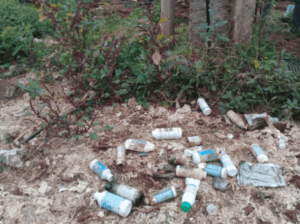
2. Sustainable Management of Empty Pesticide Containers
Strengthening national systems for the safe collection, transport, recycling, and disposal of empty pesticide containers through community engagement, private sector partnerships, and compliance with the Food and Agriculture Organization guidelines and national regulations. The project promotes circular economy approaches and reduces environmental contamination in agricultural areas.
3. Reducing Chemical Exposure in Artisanal and Small-Scale Mining (ASM) Areas
Developing practical solutions to minimize exposure to hazardous substances (e.g., mercury, cyanide) in mining communities. The project includes health surveillance, safer mining practices, and alignment with global conventions such as the Minamata Convention on Mercury.

4. Food Safety and Chemical Contamination Control
Enhancing monitoring and mitigation of pesticide residues and other contaminants in food and agricultural commodities. The project supports compliance with national standards and international trade requirements, strengthening food safety systems across value chains.
5. Advocacy for Safe Chemical Management in Tanzania
Promoting policy reform, enforcement, and public awareness on hazardous chemicals and Highly Hazardous Pesticides (HHPs). The project supports evidence-based advocacy aligned with frameworks such as the Strategic Approach to International Chemicals Management.
6. Promotion of Biopesticides and Nature-Based Solutions
Scaling up the adoption of safer alternatives such as biopesticides and integrated pest management (IPM) to reduce reliance on hazardous chemicals while supporting sustainable agriculture.